Artists and Their Studio Cats: Feline Muses Behind Iconic Art
Cats have wandered through human creativity for centuries, slipping into paintings, curling up on sketch tables, and quietly influencing the artists who welcomed them into their studios. Their presence is subtle but unmistakable—soft paws padding across wooden floors, a warm weight settling beside a palette, a steady gaze that seems to understand the rhythm of creation. Today, we step into these intimate spaces to explore the enduring bond between artists and their studio cats, and how these feline muses shaped some of the world’s most beloved art.

How Artists and Their Studio Cats Form a Creative Partnership
The relationship between artists and their studio cats often begins as simple companionship, but it deepens into something far more meaningful. Cats bring calm to long hours of work, offer grounding during creative frustration, and provide a sense of continuity in lives often marked by change. Their quiet presence softens the edges of demanding artistic routines, creating a sanctuary where imagination can flourish.

Many artists describe their cats as steadying forces—creatures who remind them to pause, breathe, and return to the canvas with renewed clarity. In these studios, creativity and comfort intertwine.
Henri Matisse and the Quiet Grace of Studio Cats
Matisse adored cats, especially his two favorites, Minouche and Coussi. They wandered freely through his studio, often settling near his paints or curling up on the windowsill where the light pooled. Their calm, observant nature mirrored the serenity he sought in his work.
While Matisse rarely painted his own cats directly, perhaps their influence lingered in the gentle curves, soft palettes, and intimate domestic scenes that defined much of his later art. His cats were part of the studio atmosphere—silent collaborators in the pursuit of sharing beauty with the world.

Andy Warhol’s Feline Companions and Early Cat Illustrations
Before Warhol became synonymous with pop art, he created a charming series of cat illustrations inspired by his mother’s beloved felines. That early affection eventually blossomed into his illustrated book 25 Cats Name Sam and One Blue Pussy, a whimsical collection that captured the quirky personalities of the cats who shared his home. Their expressive shapes and playful gestures appear throughout his early drawings, revealing a tender side of an artist often associated with bold celebrity imagery.

This early chapter of his life echoes the creative bonds explored in our earlier piece on classical composers and their feline companions, showing how deeply cats can shape artistic expression across different mediums.
Warhol lived with several cats over the years, and their presence likely brought warmth and calm to his otherwise bustling, high‑energy world. In the story of artists and their studio cats, Warhol’s felines remind us that even the most avant‑garde creators found comfort in the familiar rhythm of a purring companion.
Tsuguharu Foujita and His Lifelong Devotion to Cats
Léonard Tsuguharu Foujita’s love for cats was legendary. He painted them with exquisite detail—sleek fur, luminous eyes, and expressive postures that captured their spirit with uncanny accuracy. He even created his own Self Portrait with a Cat, a work that was among his most famous.

His studio was often filled with cats, and he treated them as cherished muses. Foujita became so renowned for his lifelike feline portraits that he was often called a master of cat painting, a reputation he embraced with pride. I personally love his Chat endormi ("sleeping cat" in French). But this photo in the Getty images collection of him with the blue Persian, called at the time the "King of the Cats", is definitely one of my absolute favorites!
Their elegance and mystery echo the roles cats have played throughout history, as seen in stories of cats in mythology and folklore. For Foujita, cats were more than subjects; they embodied grace, independence, and a spirit he found endlessly compelling. His devotion shaped an entire chapter of his artistic identity, and his remarkably sensitive portrayals earned him international recognition as one of the great feline painters of the 20th century.
Why Cats Appear So Often in Artistic Spaces
The connection between artists and their studio cats isn’t just historical—it’s universal. Cats naturally gravitate toward warm, creative environments filled with soft textures, gentle light, and even cat‑safe plants for creative spaces, which add a touch of living beauty without compromising safety. They enjoy the quiet focus of a working artist, the soft textures of fabric and paper, and the gentle hum of concentration.
Their presence offers:
Calm during long creative sessions
A grounding sense of companionship
A reminder to pause and rest
A touch of whimsy and unpredictability
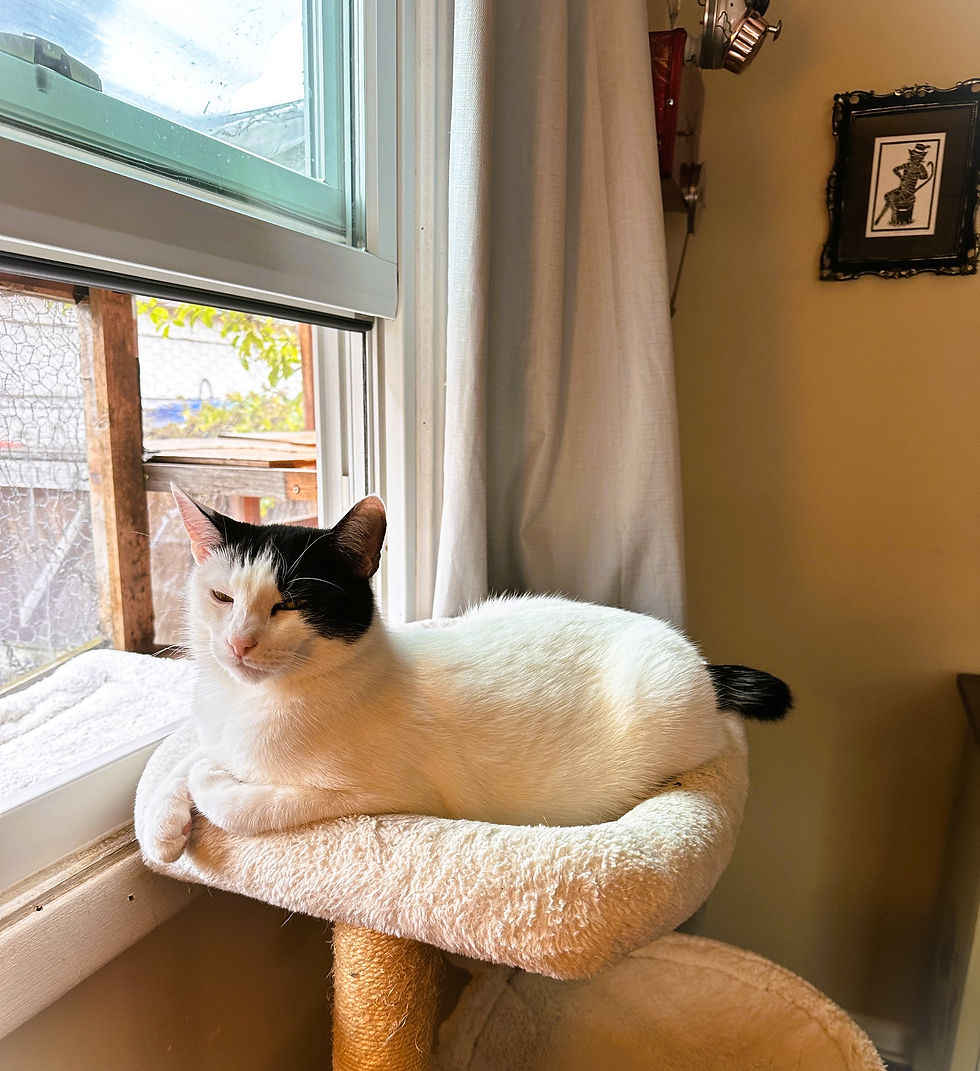
In many ways, cats embody the qualities artists value most: curiosity, independence, and a quiet but powerful presence. I know that I work best with my cats nearby. In fact, Caspian is right next to me next to the catio window as I write this post. Wouldn't have it any other way!
Modern Creators and the Continuing Legacy of Studio Cats
Today’s artists still share their spaces with cats who “supervise” from shelves, nap on sketchbooks, or settle confidently on works‑in‑progress. Many contemporary illustrators and pet‑portrait artists post these moments online, offering glimpses of workspaces where a half‑finished canvas sits beside a very content cat. Curated pages like Cats in Art highlight just how many people continue this tradition, celebrating new feline‑inspired pieces alongside classics.
This legacy also finds a home in the feline‑themed work of Charley Harper, the American illustrator whose modernist style turned everyday animals, including cats, into iconic geometric muses. His pieces show how the connection between artists and their feline inspirations continues to shape creative expression across generations.
And of course, this tradition includes you, dear reader. Whether you paint, write, craft, compose, or simply shape a home filled with beauty, any cat who shares your space becomes part of your creative rhythm. Whether they inspire, distract, or warm a lap during late‑night work, studio cats continue to influence artistic lives in small but meaningful ways.
The Enduring Magic of Artists and Their Studio Cats
The story of artists and their studio cats is ultimately a story of quiet magic. It’s about the way a soft purr can steady a hand, how a warm presence can ease creative doubt, and how the companionship of a cat can transform a studio into a sanctuary. Many makers also surround themselves with cat‑safe houseplants, adding softness and life to their surroundings without worrying about curious nibblers.
These feline muses may not sign their names on canvases, but their influence lingers in brushstrokes, color choices, and the gentle atmosphere that surrounds great art. Their legacy is woven into the creative history of the world—one peaceful moment at a time. This sense of connection also lives at the heart of Purrfectly Enchanting, where creativity and feline companionship meet in the sweetest everyday moments.


Comments