The Purrfect Muse: Classical Composers and Their Feline Companions
Updated: Apr 17, 2025
Throughout history, cats have held a special place in the hearts and homes of many classical music composers. These feline friends have provided companionship, inspiration, and even direct musical influence to some of the greatest minds in classical music. Let's explore some fascinating relationships between renowned composers and their beloved cats—the purrfect muses that were by their side as they brought their musical masterpieces into the world.

Frederic Chopin and the Frisky Feline that Inspired a Waltz
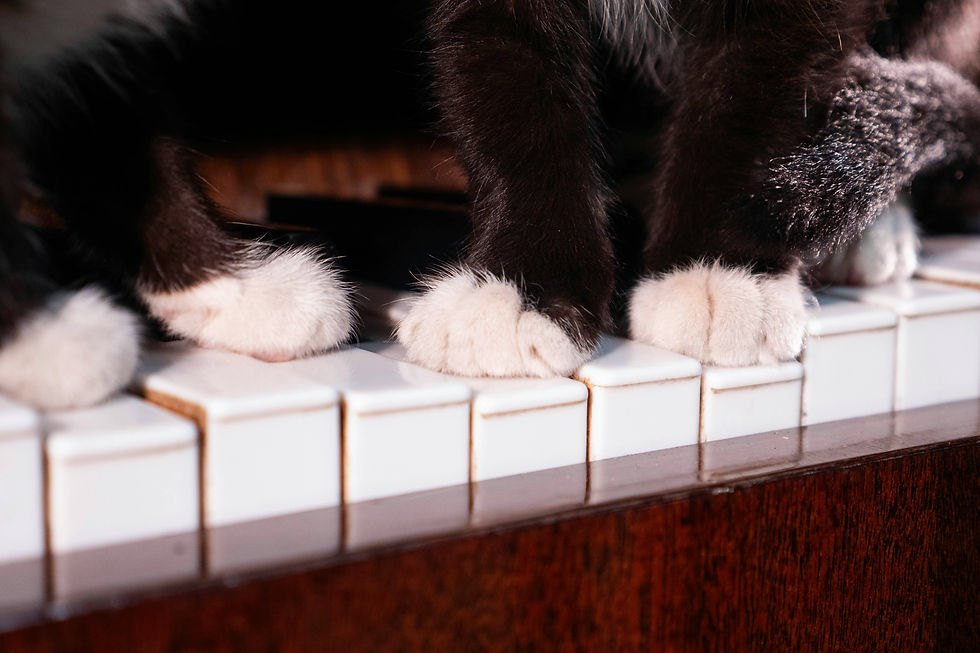
Frédéric Chopin, the Polish composer of the Romantic Age known for his emotive piano compositions, was a devoted cat lover. His most famous feline companion was a Persian cat named Valdeck. Legend has it that Valdeck would often sit on Chopin's piano while he composed, sometimes walking across the keys and inspiring melodic ideas.
One of Chopin's most beloved pieces, the "Cat Waltz" (Waltz in F major, Op. 34, No. 3), is said to have been inspired by watching Valdeck play and chase her tail. The piece has a light, frolicsome nature to it that may just conjure images of a cat's playful movements, both on and off the piano keys!

Maurice Ravel and His Sonorous Siamese Companion
Maurice Ravel, the French composer known for works like "Boléro" and "L'heure espagnole" (The Spanish Hour/Spanish Time), was another classical musician with a deep affection for cats. He had a Siamese named Mouni, who was a constant presence in his life and studio. Ravel's affinity for cats directly influenced his music, most notably in his second opera, "L'enfant et les sortilèges" (The Child and the Spells).
In this one-act opera, Ravel composed "Duo miaulé," a "meowed duet" set to music. Ravel blended his passion for cats with his musical genius, creating a unique and memorable operatic moment. Watch and listen to Berlin Philharmoniker baritone (role of Le Chat) and mezzo-soprano (role of La Chatte) singers performing the Duo miaulé here.

Igor Stravinsky's Meowgical Modernist Compositions
Igor Stravinsky was born in Russia and by t the age of 20 he was under the tutelage of the brilliant Nikolay Rimsky-Korsakov. Known for his revolutionary works like the ballets "Petrushka" and "The Rite of Spring," Stravinsky was a lifelong cat enthusiast. He befriended several cats throughout his life, each leaving its mark on his creative process. He named one of his cats, Kastchei, after a character in his ballet "The Firebird," a work that catapulted him to success as "Russia's leading young composer." (Britannica.com).
Stravinsky once remarked, "I don't know if I like cats or if they like me, but we get along very well." This mutual respect between the composer and the cats that spent time with him often resulted in feline-inspired musical phrases and rhythms in his compositions.
Arnold Schoenberg's Catlike Twelve-Tone Technique
Arnold Schoenberg, the Austrian-American composer who is credited with developing the twelve-tone technique, was another notable cat lover in the classical music world. His cat, Pempo, was a constant companion during his groundbreaking work in atonal music.
Interestingly, some music theorists have drawn parallels between Schoenberg's twelve-tone technique and the unpredictable nature of cats. Both exhibit a certain level of organized chaos, with patterns that may not be immediately apparent but reveal themselves over time.
Gustav Mahler's Paw-Printed Scores
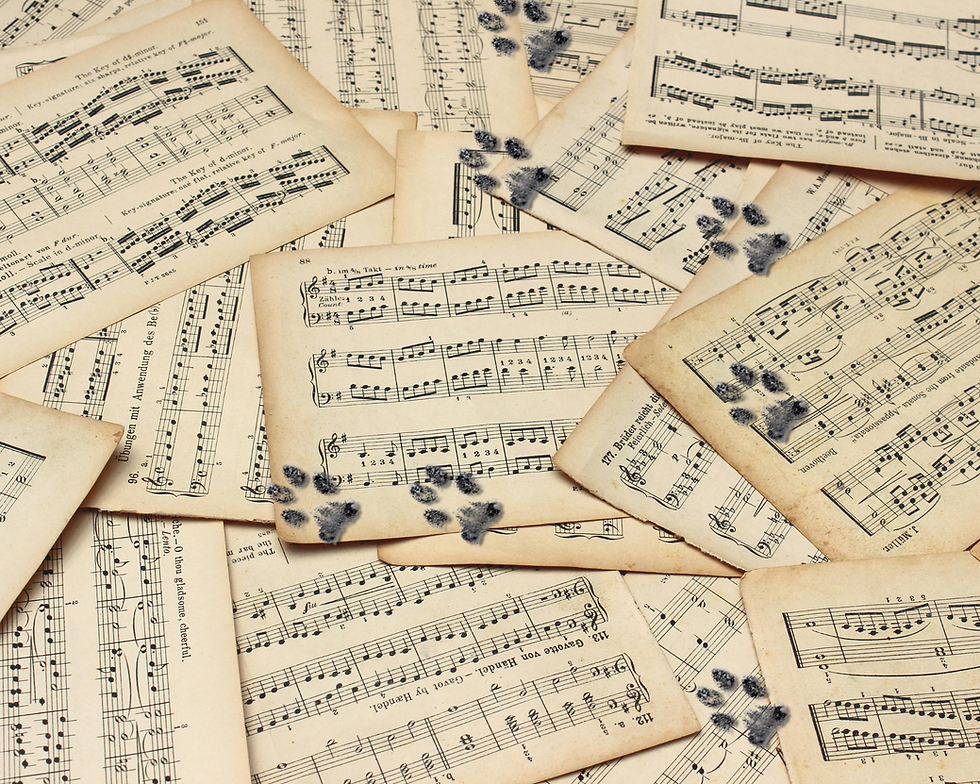
Gustav Mahler, the late Romantic Austrian composer, was known for his expansive symphonies and love for cats. His cat, Gatschi, was often present during his composing sessions. In her memoirs, Mahler's wife, Alma, wrote about how Gatschi would sit on Mahler's scores, sometimes leaving paw prints on the pages.
While there's no direct evidence of cat themes in Mahler's music, the presence of his feline friend undoubtedly provided comfort and companionship during his intense composing periods.
The Trend of Composers and Cats
The relationship between classical composers and cats seems more than just a coincidence. Cats have long been associated with creativity, independence, and mystery—qualities that musicians, artists, writers, and all of us embody in our creative adventures. Whether they're unleashing a bit of mischievous mayhem or exuding tranquil Zen vibes, cats effortlessly set the stage for encouraging a burst of creative thought or meow-lodic inspiration.
It's fun to think that maybe the rhythmic purring of a content cat could have subconsciously influenced the rhythms and tempos in some compositions. Their graceful movements may have inspired flowing melodies, while their sudden bursts of energy might have translated into dynamic changes in musical pieces. Either way, Leonardo da Vinci put it best when he stated that:
"The smallest feline is a masterpiece."
Classical Composers Continuing the Tigerish Tradition
Mousers of all shapes and sizes continue to inspire composers and their works. Contemporary classical composer Judith Shatin wrote a piece called "Dreamtigers" that was inspired by poet Jorge Luis Borges and his prose poem of the same name about his dreams of conjuring tigers.
Modern composer, David Teie, is a soloist with the Washington D.C.-based National Symphony Orchestra. Teie worked with animal scientists to create "Music for Cats," specifically created for cats and the sounds and tempos that cats find comforting. His work not only soothes the feline ear but also represents a fascinating intersection of music, science, and our bond with animals. Across centuries, the feline mystique has prowled the landscapes of musical creativity, from inspiring operatic arias to lending an enigmatic essence to contemporary compositions.
The Science Behind Cats and Creativity
Studies have shown that spending time with cats can reduce stress, improve well-being, and positively affect our health. Interacting with and petting a cat can also influence the release of the neuropeptide oxytocin—often dubbed the “love hormone”—which promotes relaxation and may even enhance creative thinking in some individuals.
Moreover, a relaxed state of mind has long been associated with increased cognitive flexibility and divergent thinking, both of which are key ingredients in creative breakthroughs. For example, research on mindfulness meditation has shown that practices which reduce stress can open up mental pathways and foster innovative thinking, while complementary methods for managing stress have been linked to improved creative problem-solving. This confluence of findings offers a compelling explanation for why, throughout history, many composers and artists have found solace—and spark of inspiration—in the gentle presence of their feline friends.
Tips for Music-Making with a Feline Companion
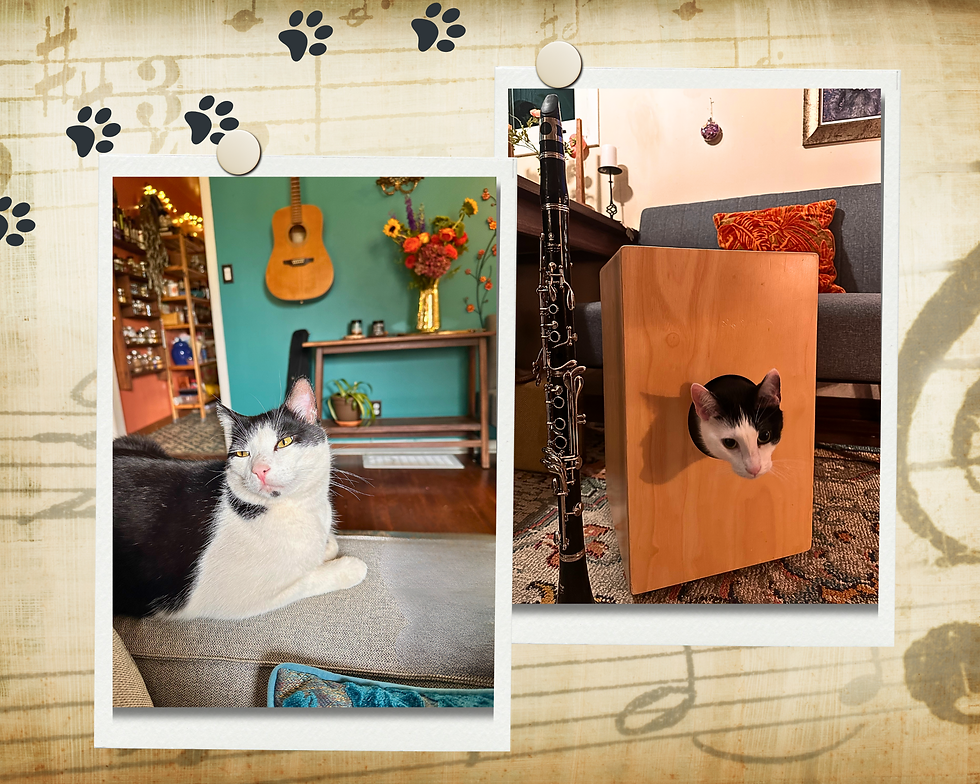
As a musician, I love having my cats around during practice sessions at home! Caspian is our energetic youngest cat who loves jumping into our cajon (when we're not playing it of course), and Jupiter is our distinguished tuxedo kitty who always comes around when the instruments come out.
Want to harness some feisty feline energy and embrace your inner maestro? Just have fun and let every purr, twitch, and playful leap by your whiskered muse spark a burst of musical magic with these fun, feline-inspired tips!
Observe your cat's movements and try to translate them into musical phrases.
Record your cat's purrs or meows and incorporate them into your compositions.
Use your cat's daily routines as inspiration for lyrics and/or the structure of a piece.
Create a comfortable space for your cat in your studio to encourage their presence during composing sessions.
Consider naming musical pieces or movements after your feline friends.
The Enduring Legacy of Classical Composers and Their Feline Companions
From Chopin's Valdeck to Ravel's Mouni, cats have played a central role in the lives and works of many classical composers. These feline muses have provided companionship, inspiration, and even direct musical influence, leaving their paw prints on some of history's most beloved classical compositions.
The special relationship between composers and their cats remains a fascinating subject--reminding us of the unexpected sources of inspiration that can shape artistic creation.
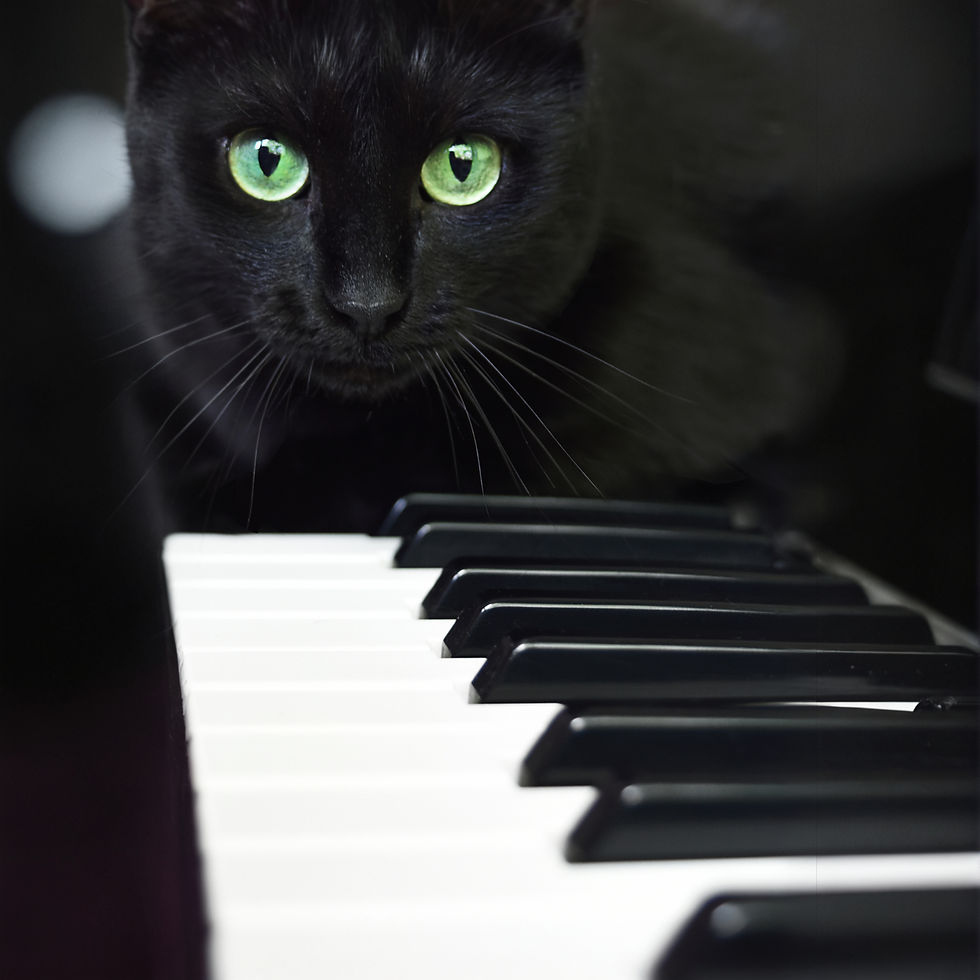
Whether you're a classical music aficionado or a cat enthusiast (or both), the stories of these musical ailurophiles offer a unique perspective on the creative process and the enduring bond between people and their purrfect muses. So the next time you listen to a piece by Chopin or Ravel, remember—there just meow-ight be a hint of feline inspiration in those notes!
Listen to the Meow-sic
In addition to the compositions linked throughout this blog, discover a few more cat-inspired musical creations below:
Domenico Scarlatti - Sonata in G minor K30 "Cat's Fugue" (the latter title coined by Muzio Clementi)
Frédéric Chopin - "Cat Waltz" (Waltz in F major, Op. 34, No. 3)
Relaxing Music for Cats by Halidon Music
Clips of David Teie's Music for Cats on YouTube (or purchase full album for $17 at https://www.musicforcats.com/)
Happy listening!


Comments