Mythical Cats: Legends and Folklore from Around the World
Cats have always been more than companions. Across cultures, they appear in mythical cat legends and folklore, embodying mystery, protection, and supernatural power. From Egypt’s revered Bastet to Iceland’s fearsome Yule Cat, these stories reveal how humans have long seen cats as guardians, tricksters, and magical beings.
Bastet – The Egyptian Cat Goddess in Mythology
In ancient Egyptian cat mythology, Bastet was worshipped as a goddess of home, fertility, and protection. Depicted as a lioness or domestic cat, she symbolized both nurturing and fierce defense. Temples dedicated to Bastet drew pilgrims, and harming a cat was considered a grave crime. This reverence shows how cats became sacred protectors in Egyptian culture.

Maneki Neko – Japan’s Lucky Beckoning Cat Legend
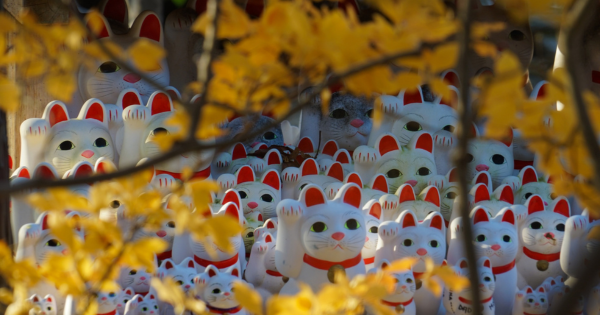
The Maneki Neko, or “beckoning cat,” is one of the most famous Japanese cat legends. Originating in the Edo period, it is said a cat saved a samurai by beckoning him away from danger. Today, Maneki Neko statues are found in shops and homes, each color symbolizing blessings like wealth, health, or happiness. Its raised paw continues to invite prosperity.
Bakeneko and Nekomata – Shape-Shifting Cats in Japanese Mythology
Japanese folklore features the Bakeneko (“changed cat”) and Nekomata, two supernatural cats. The Bakeneko was believed to gain magical powers as it aged, sometimes walking on two legs or speaking human language. The Nekomata, with its split tail, was said to command the dead. These myths emphasize the cat’s uncanny aura and its association with transformation.

Freyja’s Cats – Norse Mythology and Fertility Folklore
In Norse mythology, the goddess Freyja rode in a chariot pulled by two powerful cats. Farmers often left offerings for cats to gain her favor, hoping for fertile fields and abundant harvests. These legendary cats symbolized fertility, domesticity, and the divine feminine, reinforcing the cat’s role as a sacred companion in Scandinavian folklore.

Cat Sìth – The Spectral Cat of Scottish Folktales
Scottish folklore warns of the Cat Sìth, a large black cat with a white spot on its chest. Believed to roam the Highlands, it was said to steal souls before burial. Villagers held lively wakes to distract the Cat Sìth, blending fear with ritual. This tale highlights the cat’s dual role as both feared supernatural being and respected guardian.

Jólakötturinn – Iceland’s Fearsome Yule Cat Legend
The Yule Cat (Jólakötturinn) prowls Icelandic folklore as a fearsome creature that devours those who fail to receive new clothes before Christmas. Though terrifying, the legend encouraged generosity and industriousness during the winter season. Today, the Yule Cat is often depicted in festive art, blending menace with holiday tradition.

Mythical Cats in Global Legends and Folklore – Guardians, Tricksters, and Supernatural Beings
Across cultures, mythical cats in folklore embody paradox: protectors and tricksters, symbols of abundance and omens of doom. From Bastet’s divine guardianship to the Yule Cat’s winter menace, these stories reveal humanity’s awe of feline grace and our tendency to project mystery onto creatures that resist easy understanding.
Whether divine, spectral, or mischievous, cats in mythology remind us of the enduring bond between humans and the enigmatic feline. These cat legends and folklore from around the world continue to enchant, offering timeless stories that celebrate the mystery of cats.
Misunderstood Cats in Myth and Folklore – The Black Cat Connection
Just as these legends show cats as both protectors and tricksters, many myths have unfairly cast certain felines in a shadow. Black cats, in particular, have long been misunderstood — feared in some cultures, yet celebrated in others as symbols of luck and mystery.

At Purrfectly Enchanting, we believe every cat deserves to be seen for the magic they truly bring. Curious about the truth behind black cat myths? Continue your journey with our Black Cats in History and Myth blog — and explore the stories that reveal them to be the beautiful, beloved companions they truly are.


Comments